


BEST CARBS BEFORE LIFTING
Should You Eat Carbs Before or After Lifting?
Table of Contents
- Should You Eat Carbs Before or After Lifting? The Straight Answer
- The Pre-Workout Meal for Weight Training: What to Eat and When
- How Long Before a Workout to Eat: Timing That Actually Works
- Best Carbs Before Lifting: Fast, Easy, and Effective Options
- Do You Need Carbs Before Lifting? When You Can Skip Them
- Post-Workout Meal for Muscle Recovery: Carbs After Lifting
- Carb Timing for Different Goals: Cutting, Bulking, and Performance
- Conclusion: Carbs Before or After Lifting? Here's What to Do
- Frequently Asked Questions
Last Updated: October 6, 2026
Should You Eat Carbs Before or After Lifting? The Straight Answer
Here's the truth: the answer is both, and the timing matters more than most people think. At Tiger Fitness, we get this question every single day from lifters who want to know exactly when to eat carbs to maximize their training and recovery.
Carbohydrates are the body's preferred fuel source during hard training. When you lift heavy, your muscles burn through glycogen, which is stored carbohydrate. Skip carbs entirely and your training session will suffer.
The Academy of Nutrition and Dietetics guidance on workout nutrition recommends eating a mix of protein and carbs one to four hours before exercise, then again within about 60 minutes after. That's the framework. Simple, proven, effective.
But here's what most guides get wrong: they treat this like a one-size-fits-all rule. It's not. Your goals, your schedule, and how your stomach handles food all change the answer.
Below, we'll break down exactly what to eat, when to eat it, and how to adjust for cutting, bulking, or pure performance.
The Pre-Workout Meal for Weight Training: What to Eat and When
The best pre-workout meal for weight training combines fast-digesting carbs with a moderate amount of protein, eaten 1-3 hours before you touch a barbell. This gives your body time to digest while topping off muscle glycogen.
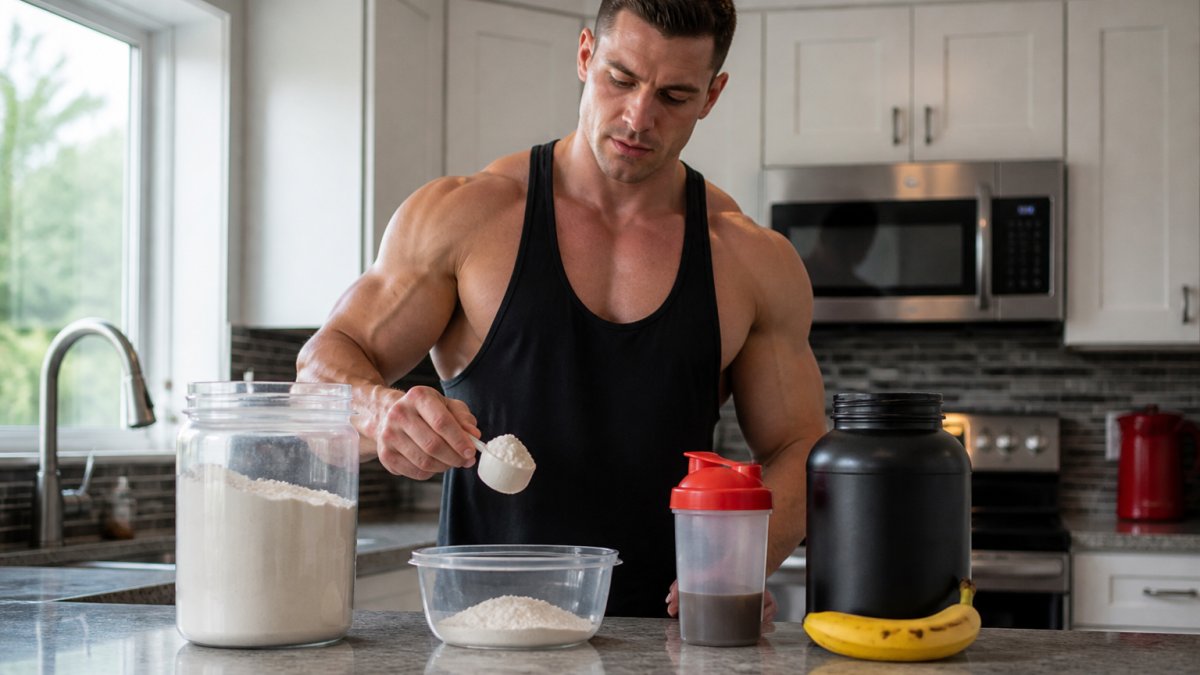
Here's the part most guides skip: how much. Carbs are the variable that matters most before lifting, and the amount should scale with your body weight, how long you'll train, and how much time you have before your first set.
Pre-workout carb ranges by context:
| Your Situation | Carbs Before Lifting | Protein | Example Meal |
|---|---|---|---|
| 3-4 hours out, full meal | 1-2 g per kg body weight | 25-40 g | 8 oz chicken, 1.5 cups white rice, small banana |
| 2 hours out, moderate meal | 0.5-1 g per kg | 20-30 g | 1 cup oats with 1 scoop whey, 1 tbsp honey |
| 30-60 minutes out, snack | 0.3-0.5 g per kg | 15-20 g | Cream of rice with whey isolate, or a banana plus a shake |
| Under 30 minutes, liquid only | 20-40 g fast carbs | 10-15 g | Carb powder in water, or a small sports drink |
For a 200 lb lifter, that full meal at 3-4 hours out lands around 90-180 g of carbs. If you want to skip the guesswork, our FREE TOOLS & FITNESS CALCULATORS can help you dial in your daily macros and training numbers.
Food choice matters as much as timing. Fat and fiber slow gastric emptying, which is great for a normal meal and terrible 90 minutes before squats. Keep pre-workout fat under about 10 g and fiber low.
Fast carb sources that work well before lifting:
- White rice, cream of rice, or white potatoes
- Oats (if you have 2+ hours)
- Bananas, pineapple, or other low-fiber fruit
- Carb powders like Karbolyn or Vitargo when time is tight
Lean protein sources that digest quickly:
- Whey isolate or hydrolyzed whey
- Egg whites
- Chicken breast or white fish
If you get nauseated eating before training, you're not broken. It's a common pattern. Three fixes: shrink the meal and move it closer to training as a liquid, drop fat and fiber to near zero, and sip rather than eat solid food.
The Hospital for Special Surgery pre- and post-workout nutrition guide suggests a full meal three to four hours out, or a higher-carb snack about two hours before training.
One more thing: if you train first thing in the morning, you don't need to force a full meal. A liquid carb and protein shake 30-45 minutes before your first set is enough to top off liver glycogen and get amino acids into your system.
How Long Before a Workout to Eat: Timing That Actually Works
Aim to finish your pre-workout meal 1-3 hours before lifting. A smaller snack can work 30-60 minutes out if your stomach tolerates it.
Here's a simple timing table to follow:
| Time Before Training | What to Eat | Example |
|---|---|---|
| 3-4 hours | Full mixed meal | Chicken, rice, vegetables |
| 2 hours | Higher-carb snack | Oats with whey protein |
| 30-60 minutes | Fast liquid carbs | Carb powder or a banana |
The closer you eat to training, the smaller and simpler the meal should be. A heavy meal 30 minutes before a leg day is a recipe for cramps and nausea.
Pro Tip Liquid carbs digest faster than solid food. If you train early in the morning and can't stomach a real meal, a carb powder mixed in water gets you fueled without the full feeling.
Best Carbs Before Lifting: Fast, Easy, and Effective Options
The best carbs before lifting are fast-digesting sources that hit your bloodstream quickly without weighing you down. Think white rice, cream of rice, bananas, and carb powders.
Our go-to picks at Tiger Fitness:
- Raw Nutrition Cream of Rice is a fast-digesting carb source built for pre-workout energy. Easy on the stomach, quick to prepare, and you can mix in protein or fruit.
- MuscleSport Cream'd Rice Gourmet delivers 25 grams of real food carbs per serving with a smooth texture and gourmet flavors.
- EFX Sports Karbolyn is a performance carb powder made from potato, rice, and corn. It mixes instantly and works before, during, or after training.
Whole-food carbs like oats and fruit work fine too. The key is keeping fat and fiber low so digestion stays fast.

Do You Need Carbs Before Lifting? When You Can Skip Them
You can skip pre-workout carbs if you're doing a short, low-volume session or training fasted by choice. For long, heavy, or high-volume workouts, skipping carbs usually costs you performance.
Here's the nuance most people miss. A 2022 review on carbohydrate intake and strength training performance found that high carb intake is commonly recommended for strength athletes, but the evidence doesn't prove every single lifting session needs a carb load before it.
Translation: carbs help, but context decides how much.
Skip or reduce pre-workout carbs when:
- Your workout is under 45 minutes
- You're doing light technique work
- You ate a solid meal 3-4 hours earlier
- Your stomach is sensitive to food before training
Watch Out Training fasted on heavy leg or back days often leads to early fatigue and dropped intensity. If your performance tanks mid-session, missing carbs is usually the reason.
Post-Workout Meal for Muscle Recovery: Carbs After Lifting
Your post-workout meal for muscle recovery should combine carbs and protein within about 60 minutes of your last set. Carbs refill glycogen. Protein rebuilds muscle.
The Academy of Nutrition and Dietetics recommends eating within roughly 60 minutes after exercise to support recovery. This window matters most when you train again within 24 hours.
A solid post-workout plate:
- 30-50 grams of fast carbs
- 20-40 grams of quality protein
- Plenty of water or electrolytes
Kris Gethin's Unmatched Intra is built for this. It packs 25 grams of Vitargo carbs plus EAAs, electrolytes, and taurine to support recovery during and after hard training.

Carbs after lifting also help you recover faster between sessions. Skip them and your next workout suffers.
Carb Timing for Different Goals: Cutting, Bulking, and Performance
Your goal changes your carb timing, not whether you eat them. Cutting, bulking, and performance training each call for a different approach, and the differences are bigger than most people admit.
Cutting (fat loss, preserving muscle):
Total carbs come down, but placement matters more, not less. Put the majority of your daily carbs around training: roughly 30-50 g before, 30-50 g after, and the rest spread across your other meals. Protein stays high (1 g per lb body weight or more) to protect muscle in a deficit. If you're doing fasted cardio plus lifting, the pre-workout carbs go before the lift, not the cardio.
Bulking (gaining size):
Carbs at every meal. You need the calories to grow, and timing matters less when total intake is high. A common pattern is 2-3 g of carbs per lb of body weight per day, spread across 4-6 meals, with the largest carb portions around your workout. If gaining size is the goal, carbs drive the process.
Performance (strength, power, sport):
Fuel before, during, and after. For sessions over 90 minutes, or for anyone training twice a day, intra-workout carbs become non-negotiable. A common range is 30-60 g of fast carbs per hour of training, sipped in a shake or sports drink. This is the one context where carb timing genuinely changes the outcome, not just how you feel.
Session duration changes the answer more than your goal does:
- Under 45 minutes, low volume: pre-workout carbs are optional. Total daily intake is what matters.
- 45-75 minutes, moderate volume: 30-60 g before, 30-50 g after.
- 75+ minutes, high volume, or heavy compound work: 60-100 g before, 50-75 g after, plus intra-workout carbs if you're pushing hard.
- Two sessions in one day: carbs before, during, and after both. The second session is where skipping carbs shows up immediately.
On the "do lifters even need workout carbs" debate:
A 2022 review on carbohydrate intake and strength training performance found that high carb intake is commonly recommended for strength athletes, but the evidence doesn't prove every single lifting session needs a carb load before it. Both sides of the internet argument are half right. Carbs help performance and recovery, but total daily intake and session demands decide how much the timing matters. A recreational lifter doing 40-minute sessions in a fed state won't notice a difference.
Key Takeaway Carbs aren't optional for serious lifters. The only real question is when and how much, and that depends on your goal, your session length, and how many times a day you train.
Conclusion: Carbs Before or After Lifting? Here's What to Do
The honest answer to should you eat carbs before or after lifting is both, timed around your training. Eat fast carbs 1-3 hours before for energy, then again within an hour after for recovery.
The exact timing depends on your goals, your schedule, and how your stomach handles food. Nail the basics first, then adjust.
At Tiger Fitness, we stock everything you need to fuel both windows: fast carb sources, recovery formulas, and the guidance to use them right. Check out our free fitness tools and calculators to dial in your numbers. Get started with Tiger Fitness and fuel your training the smart way.
Frequently Asked Questions
Should I eat carbs before or after a lift?
Both work, but timing depends on your goal and schedule. The Academy of Nutrition and Dietetics recommends protein and carbs one to four hours before exercise and within about 60 minutes after. If you train fasted in the morning, a fast-digesting carb source 30 to 60 minutes before can help. If you eat a full meal three to four hours out, you may only need a small snack before. Post-workout carbs help replenish glycogen for recovery. Most lifters benefit from carbs at both ends.
How long before lifting should I eat carbs?
It depends on meal size. A full meal with protein and carbs needs three to four hours to digest, according to the Hospital for Special Surgery. A higher-carb snack about two hours before works for most. If you are short on time, a fast-digesting carb source like cream of rice or a carb powder 30 to 60 minutes before training can fuel your session without sitting heavy. Experiment to find what keeps your energy steady without stomach issues.
What are the best carbs to eat before a workout?
Fast-digesting carbs that clear the stomach quickly are your best bet. Cream of rice, white rice, and carb powders like Karbolyn are solid choices. A 2022 review on carbohydrate intake and strength training notes high carb intakes are commonly recommended for athletes, but the research does not prove more carbs improve every session. Pair your carbs with protein for a mixed meal. Avoid heavy fiber and fat right before lifting, since they slow digestion and can cause discomfort.
Can you lift weights without eating carbs first?
Yes, you can. Fasted training works for some lifters, especially for shorter or lower-volume sessions. But if you are doing hard training, high volume, or going for a PR, low blood glucose can tank your energy and focus. The research does not support a universal claim that carbs are required before every session. If you train fasted and feel fine, keep doing it. If you crash mid-workout, add a fast-digesting carb source 30 to 60 minutes before.
Leave a comment