


CHONDROITIN DOSAGE
Glucosamine and Chondroitin Dosage for Athletes: What Works?
Last Updated: November 16, 2026
Quick Summary
Most glucosamine and chondroitin dosage studies were done on people with knee osteoarthritis, not athletes, so no athlete specific dose is established. The most common combination in the studies was 1,500 mg of glucosamine and 1,200 mg of chondroitin per day. Check the label's per-serving amounts against the studied ranges before buying.
- Study glucosamine doses for joint pain ranged from 200 to 1,500 mg per day.
- Study chondroitin doses ranged from 60 to 1,200 mg per day.
- Chondroitin complex weights can include other compounds, so check the chondroitin sulfate amount.
- Look for a per-serving chondroitin sulfate figure, not the total blend weight on the front of the bottle.
- Talk to your doctor first if you have a medical condition, take medication, or face drug testing.
Which glucosamine dose fits you?Tiger Fitness lists per-serving amounts so you can check labels against the studies.
Compare Joint Formulas
Table of Contents
- What Glucosamine and Chondroitin Dosage Studies Actually Used
- Glucosamine Dosage: The Numbers From Clinical Research
- Chondroitin Dosage and Why Labels Vary So Much
- Bioavailability and Absorption: What the Research Can and Cannot Show
- Glucosamine and Chondroitin Side Effects and Who Should Be Careful
- How Long Glucosamine and Chondroitin Take to Work
- Setting Your Own Protocol: Checking the Label and Talking to Your Doctor
- Frequently Asked Questions
What Glucosamine and Chondroitin Dosage Studies Actually Used
Glucosamine and chondroitin dosage for athletes is a question most people never get a straight answer to. Most of the research was done on people with knee osteoarthritis, not lifters or runners. That matters.
A 2025 review of glucosamine and chondroitin for joint pain found that the two were most commonly taken together at 1,500 mg of glucosamine and 1,200 mg of chondroitin per day. That is the most common combination in the studies, not a proven athlete protocol.
Here is what the research actually looked at:
- Study doses for joint pain ranged from 200 to 1,500 mg per day for glucosamine.
- Chondroitin doses across studies ranged from 60 to 1,200 mg per day.
- Trial populations were mostly people with joint disease, not athletes.
Watch out: Do not assume a bigger number means a better result. Studies tested a range of amounts, and the review does not identify one dose as the winner for training athletes.
Glucosamine Dosage: The Numbers From Clinical Research
The most cited trial here is a large one. A 2006 randomized trial in the New England Journal of Medicine by Daniel O. Clegg and colleagues assigned 1,583 people with symptomatic knee osteoarthritis to several groups. One group took 1,500 mg of glucosamine daily.
The trial measured people with knee pain, not athletes, so it does not establish an athlete-specific dose.
If you are shopping for a standalone glucosamine, look at the amount per serving. Compare it to the studied range, not to the biggest number on the front of the bag. Our glucosamine product page lists its own serving details, so check the label against the studies. You can browse standalone glucosamine products by dose to compare amounts side by side.
Chondroitin Dosage and Why Labels Vary So Much
Chondroitin is where labels get messy, and it is the number one reason athletes think they are taking a clinical dose when they are not. Study doses ran from 60 mg up to 1,200 mg per day, so two bottles can look completely different and both slap "clinical dosing" on the front.
The problem starts with what is actually in the bottle. Chondroitin is sold as chondroitin sulfate, but some labels list a total weight that includes other compounds bound to the chondroitin. That means 1,200 mg on the panel is not automatically 1,200 mg of chondroitin sulfate. Read the supplement facts panel, not the front of the package, and look for the words "chondroitin sulfate" with a specific milligram amount next to them.
Here is how to translate the common label phrases into plain English:
- "Chondroitin sulfate 1,200 mg", this is the form and amount the 2025 review reported as most common in the studies. This is the number you want to see.
- "Chondroitin complex 1,200 mg", the 1,200 mg is the weight of the blend, not the chondroitin sulfate. The actual chondroitin sulfate amount is lower and often not disclosed. Treat this as a red flag until you can find the real number.
- "Proprietary joint blend", the total blend weight is listed, but the individual amounts are hidden. You cannot compare this to the studied range, so you cannot verify the dose.
- "Chondroitin 600 mg per 2 capsules", check the serving size. If the serving is two capsules and you only take one, you are getting 300 mg, not 600 mg.
The NCCIH guidance on glucosamine and chondroitin for osteoarthritis is worth reading here. The evidence for knee osteoarthritis is mixed, and you should not expect miracles.
If you want a chondroitin product that matches the studied range, do the math per serving, not per bottle. Compare the per-serving chondroitin sulfate amount to the 1,200 mg figure the 2025 review reported as most common. If the label will not give you a clean number, that tells you something about the product. You can browse chondroitin products and compare their amounts before you decide.
Watch out: A front-of-bottle claim like "1,200 mg chondroitin" can refer to the whole complex, not the chondroitin sulfate. If the panel does not break out the sulfate amount, you cannot confirm you are anywhere near the studied dose.
Chondroitin labels can look alike yet deliver very different amounts, so compare the figures side by side:
| Label wording | What it usually means | What to check |
|---|---|---|
| Chondroitin sulfate 1,200 mg | The form and amount the 2025 review reported as most common | This is the number you want to see |
| Chondroitin complex 1,200 mg | 1,200 mg is the blend weight, not the sulfate | Find the real chondroitin sulfate amount |
| Proprietary joint blend | Total blend listed, individual amounts hidden | Dose cannot be verified against studies |
| Chondroitin 600 mg per 2 capsules | Amount is per two-capsule serving | Taking one capsule gives 300 mg |
Bioavailability and Absorption: What the Research Can and Cannot Show
People ask whether their body absorbs these compounds well enough to matter. Published absorption rates or bioavailability percentages for glucosamine or chondroitin are not established here, so no figure is given.
What the studies do show is that people taking these supplements at the listed doses were the subjects being measured. Whether a given product gets absorbed as labeled is a separate question, and it depends on the product and the person.
For a product-quality angle, look for third-party testing seals on the label. A seal confirms the bottle contains what it claims. It does not prove the compound does anything for your joints.
Glucosamine and Chondroitin Side Effects and Who Should Be Careful
The research I was given includes a Harvard Health summary of glucosamine and chondroitin reporting that one study was stopped early because participants taking the supplement reported worse symptoms than those on placebo. The search result does not identify the study, its sample size, or the formulation. Do not generalize that to every product.
Anyone with shellfish allergies, diabetes, or on blood thinners should talk to a doctor before starting. Check your specific label and talk to your doctor about your situation.
Stop taking any supplement and see a doctor if you get new swelling, rash, stomach upset that won't settle, or joint pain that gets worse.
How Long Glucosamine and Chondroitin Take to Work
The research does not establish a reliable timeline for when people notice results.
What I can tell you is practical. Pick a dose, take it consistently, and track your joint pain and training tolerance for a set period. If you see no change after a reasonable trial, that is information too. Bring the results to your doctor instead of just doubling the dose. If you are trying to match your training load to what your joints can handle, the Free Tools & Fitness Calculators are a useful place to start tracking the numbers that matter.
Setting Your Own Protocol: Checking the Label and Talking to Your Doctor
Setting a protocol is not just picking a number off a study. Reading the label carefully and knowing what the claim on the front actually proves matters.

Start with the supplement facts panel. Write down the glucosamine and chondroitin amounts per serving, and note the serving size. Compare those amounts to the studied ranges: 200 to 1,500 mg glucosamine and 60 to 1,200 mg chondroitin per day. If the label hides the individual amounts behind a proprietary blend, you cannot verify the dose, and that is your answer.
Next, translate the claim. Supplement claims fall into a few buckets, and each one means something different:
- Structure/function claims, language like "supports joint health" or "helps maintain healthy cartilage." These describe how a nutrient affects normal body function. They do not claim to treat, cure, or prevent any disease, and they are not pre-approved by the FDA before the product goes to market.
- Health claims, language that links the product to a disease or health condition, like "may reduce the risk of osteoarthritis." These require specific FDA authorization or a qualified health claim with qualifying language, and they are held to a higher evidence standard.
- Nutrient content claims, language like "high in" or "good source of." These describe the amount of a nutrient, not what it does for your joints.
That distinction matters. A structure/function claim is not proof the product works. It is a statement about normal function that the manufacturer is responsible for substantiating. The FDA does not approve it before sale, and the FTC holds the advertising to a truth-in-advertising standard.
Now verify the evidence. If the label or website cites a study, find it. Check the dose used in the study against the dose in the bottle, check the population (osteoarthritis patients are not athletes), and check who funded it. A cited study that used 1,500 mg of glucosamine does not support a product that delivers 500 mg per serving.
Check for a third-party testing seal. A seal like NSF Certified for Sport or Informed Sport confirms the bottle contains what it claims and is free of banned substances. That matters for athletes subject to drug testing. It does not prove the compound does anything for your joints, it proves the label is honest about contents.
Then talk to your doctor before starting, especially if you have a medical condition, take medication, or are subject to testing. Bring the label and the numbers you wrote down.
If a claim looks misleading or a product causes harm, you have options. Report the product to the FDA through its MedWatch program, and report misleading advertising to the FTC. Those are the consumer-protection channels that exist for exactly this situation.
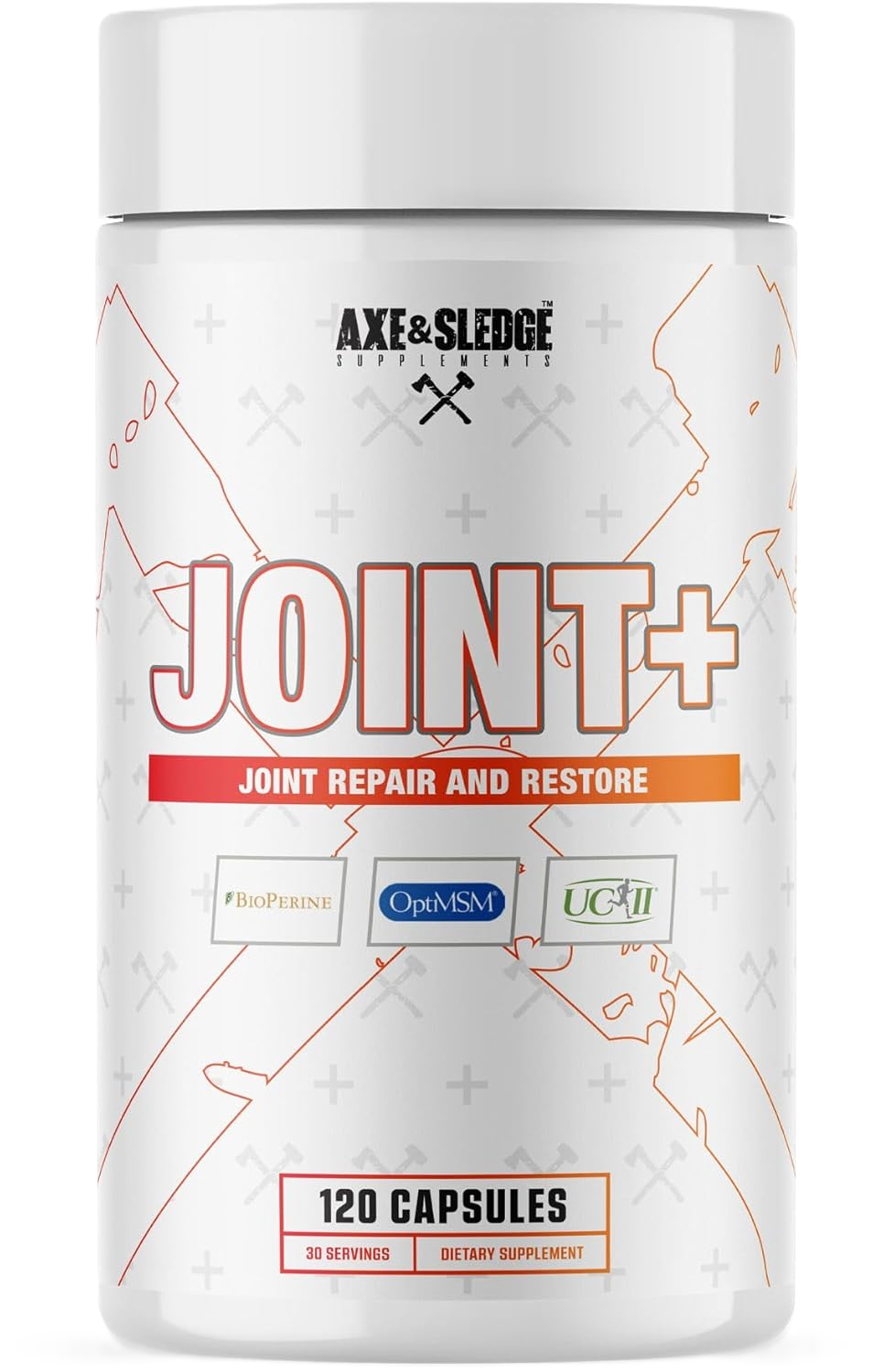
If you want a single product that already combines these ingredients, the Axe & Sledge Joint+ V2 listing lists glucosamine and chondroitin alongside other joint ingredients. If you would rather see how it stacks up, see the combined joint-health option as an alternative to stacking separate ingredients.
For a broader look at choosing between joint products, see how to compare joint support supplements for athletes. You can also browse glucosamine chondroitin formulas to compare amounts side by side.
Frequently Asked Questions
What is the typical glucosamine and chondroitin dosage for athletes?
No dosage has been established specifically for athletes. The clinical studies that have been run used different populations, mostly people with joint pain or knee osteoarthritis. A 2025 review found that the most common combined daily doses in those studies were 1,500 mg of glucosamine and 1,200 mg of chondroitin, and study ranges spanned 200 to 1,500 mg per day for glucosamine and 60 to 1,200 mg per day for chondroitin. Those are study doses, not a prescription for training. Check the label and talk to a qualified healthcare professional before you settle on an amount.
Should athletes take glucosamine and chondroitin together?
Some people do, and it is the most common combination in the research. But the evidence is mixed. Evidence for knee osteoarthritis is mixed, and some findings advise against relying on chondroitin alone or with glucosamine for that condition. Taking them together is not proven to work better for athletes, so judge the product on its ingredients and your own response.
How long does glucosamine and chondroitin take to work?
The research does not give a reliable timeline for athletes. Studies of joint pain have run for weeks to months before measuring results, so expecting changes in days is unrealistic. Track your joint symptoms and training tolerance over a defined period, and if you see no meaningful change, stop wasting money on the product and reassess with your doctor.
Are glucosamine and chondroitin safe for athletes?
For many healthy adults they are generally well tolerated, but that is not the same as proven safe for every person. Side effects in studies are typically mild, such as stomach upset. Some reporting describes a study stopped early because participants on the supplement reported worse symptoms than those on placebo, so the evidence does not support assuming these products help everyone. People who take blood thinners, have diabetes, or have shellfish allergies should check with a doctor before starting.

Leave a comment