


FAKE SUPPLEMENT LABELS
How to Spot Fake Supplement Certifications?
Last Updated: October 31, 2026
Quick Summary
To spot fake supplement certifications, first confirm the certifying body is real and named on the label, then search its official public database for the exact product. A logo alone is only a claim, so check the lot number against certified batch records before you buy.
- A seal that never names the certifier is a red flag.
- Type the certifier's search address yourself rather than clicking a link on the package.
- Match the exact flavor, serving size, and lot number to the database listing.
- Some programs certify facilities, not individual products, so know which one you are trusting.
- Buy from authorized retailers or the brand's own site, not unknown marketplace sellers.
Table of Contents
- Why a Logo on the Label Does Not Prove Certification
- Step 1: Find the Certifier and Confirm It Is Real
- Step 2: Look Up the Product in the Certifier's Public Database
- Step 3: Inspect the Label and Packaging for Fake Supplement Labels
- Recognizing Genuine Supplement Certification Logos
- Understanding Third-Party Tested Supplements and What Each Program Tests
- What to Do When a Seal or Product Cannot Be Verified
- Your Next Step: Verify Before You Buy
- Frequently Asked Questions
Why a Logo on the Label Does Not Prove Certification
Slapping a seal on a tub costs a scammer almost nothing. Anyone can copy a logo, print it on a label, and ship it. That's why the first thing I tell people is this: a logo tells you a company claims something. It doesn't prove the product was tested.
A seal on a label is only a claim until you check it yourself. Don't trust the picture; verify the seal.
So how do you spot fake supplement certifications? Verifying supplement certifications takes three steps. Work through them in order every time.
Step 1: Find the Certifier and Confirm It Is Real
Start by reading the seal and identifying the organization behind it. Look for the exact name of the certifying body, not just a logo or a vague phrase like "tested for quality."
Then confirm the certifier exists and runs a real program. Check the certifier's own website, not a link printed on the package. A fake seal often links to a lookalike domain or nothing at all.
Watch out: a seal that never names the certifier is a red flag. Real third-party programs put their name right on the label.
Third-party programs worth knowing include NSF and USP. Read the NSF's dietary supplement certification overview to see how real product testing is described and what it covers.
Step 2: Look Up the Product in the Certifier's Public Database
This is the step most people skip, and it's the one that actually catches fakes. A logo is a claim. A database listing is evidence. Legitimate certifiers publish searchable product databases, and if the product isn't there, the claim doesn't hold up. Here's the full workflow, including the lot-level check most people never run.
The search sequence:
- Go to the certifier's official product search page. Type the address yourself; don't click a link printed on the package.
- Search by brand name first, then narrow by product name.
- Match the exact product, flavor, and serving size to the listing. A listing for a different size or flavor is not confirmation for the one in your hand.
- Note the certification status and any listed dates. An expired or withdrawn listing is not a current certification.
Product-level versus lot-level certification. This is where most people get it wrong. Some programs certify a product line; others certify specific lots or batches. If the program is lot-based, the database entry should let you match the lot number printed on your package to a certified batch. If the lot number on your tub doesn't appear in the certifier's records, the seal on that tub proves nothing, even if the product line is legitimately certified. A counterfeiter can copy a product name and a logo, but it is far harder to fake a matching certified batch record.
Facility certification is not product certification. Some programs certify the manufacturing facility, not the individual product. A facility seal tells you the plant was audited. It does not tell you that the specific tub in your hand was tested. Know which one you're looking at before you trust it.
When the product isn't listed: don't assume it's a typo and move on. Check the spelling, try the parent company name, and read the database's own help page for how it formats entries. If it still doesn't show up, treat the certification as unverified, because it is. A missing listing is not proof of fraud, but it is proof you cannot confirm the claim, and that is enough to walk away.
Pro Tip Screenshot the database listing: product name, lot number if shown, and the date you checked. If you later have a problem with the product, that record is your evidence of what the certifier claimed and when.
Use this table to scan the three checks in the database search sequence and what each one tells you.
| Check | What to do | What it proves |
|---|---|---|
| Search page | Type the certifier's address yourself | Avoids lookalike domains |
| Product match | Match exact flavor and serving size | Confirms the product in your hand |
| Status | Note certification status and dates | Expired listings are not current |
| Lot number | Match your lot to a certified batch | Proves the specific tub was tested |
| Missing listing | Check spelling and parent company | Unconfirmed claims mean walk away |
Step 3: Inspect the Label and Packaging for Fake Supplement Labels
Once you've confirmed the product in the database, compare the physical package to what's on the listing. Counterfeiters often get small details wrong.
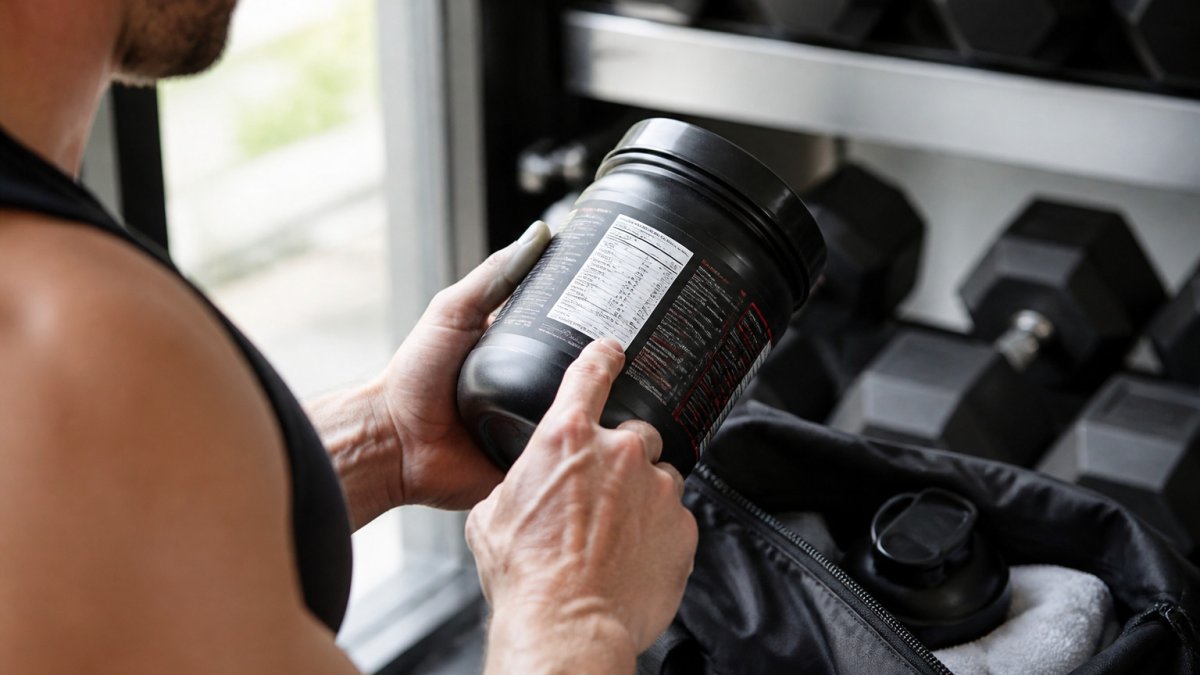
Look for these warning signs:
- Misspelled words or odd grammar on the label
- Fonts, colors, or logo sizes that don't match the brand's usual packaging
- Blurry or pixelated seals
- A lot number missing, or formatted differently than the brand's other products
- Seal placement that looks like a sticker slapped on, not printed in
Check the lot number too. A lot number that matches a certified batch in the database is strong evidence. Lot-level verification is where many fakes fall apart, because counterfeiters rarely have real certified batch records to copy.
Buy from authorized retailers or the brand's own site. Third-party marketplaces are where most counterfeit supplements show up. A "certified" seal on a bargain listing from an unknown seller should make you walk away.
on how to spot fake supplement ingredients that covers label and packaging checks in more detail. If you're also planning your training and nutrition numbers, the FREE TOOLS & FITNESS CALCULATORS from Tiger Fitness can help you work out your targets so you know exactly what you're looking for in a product.
Recognizing Genuine Supplement Certification Logos
Real certification logos share a few traits. They name a specific program, they link to a verifiable database, and they appear consistently on the brand's packaging across every product line.
Fake logos tend to be generic. They say things like "Certified Pure," "Lab Tested," or "Quality Assured" with no certifying body attached. Those phrases mean nothing on their own. Ask the same question every time: who certified this, and can I look it up?
Don't confuse a seal with an endorsement. A certifier confirming a product meets its program's testing standards is different from a celebrity or influencer saying the product works. Only the first one can be checked.
Understanding Third-Party Tested Supplements and What Each Program Tests
"Third-party tested" is a phrase, not a standard. Two products can both carry that claim and be tested for completely different things. If you don't know what a specific program actually checks, the seal is just decoration. Here's how the major programs break down and what each one does and does not verify.
Sport-specific certifications. Some programs are built around banned-substance screening for drug-tested athletes. Read the program name carefully and confirm on the certifier's site exactly which substances and contaminants it screens for, since general certifications and sport certifications cover different things.
General certifications. These differ in scope from sport certifications. Check the certifier's published scope before assuming a general seal covers sport-banned substances.
What this means for you: a seal tells you which question was asked, not that every question was answered. A sport certification might screen for banned substances without checking heavy metals. A general certification might check potency without screening for doping agents. Before you assume a seal covers everything, find the program's published scope on the certifier's own site and read what it says it tests. If the label doesn't name the program, you have nothing to look up, and that is your answer.
Watch Out A product can carry more than one certification, and that is usually a good sign. But a single seal from a narrow program does not imply coverage from a broader one. Match the certification to your actual risk (sport testing, contaminant exposure, or label accuracy) instead of assuming all seals are equivalent.
What to Do When a Seal or Product Cannot Be Verified
If you've run through all three steps and still can't confirm the certification, don't buy it. You have three clean options:
- Contact the brand directly and ask for the certifier's name and the lot-level certificate.
- Contact the certifier and ask whether the product has a current certification.
- Choose a product that's listed in a public database you can search yourself.
Report suspected counterfeits to the certifying body and, in the United States, to the FDA's MedWatch reporting page for adverse events or product safety concerns.
Don't rely on a brand's own assurance alone. A company can say "third-party tested" without naming the lab or program. Silence on specifics is the answer.
Your Next Step: Verify Before You Buy
Before your next order, run the three checks: find the certifier, search the database, and inspect the label and lot number. It takes about ten minutes and it tells you more than any seal ever will.
Shop with a clear head and ask for proof. If you want to see how verification works in practice, check out Tiger Fitness's free workout plans, diet guides, and fitness calculators.
Frequently Asked Questions
How can you tell if a supplement certification logo is real?
Do not rely on the logo alone. Note the certifier's name, then go to that certifier's own website and search its public product database for the exact product name, brand, and lot or batch number on your label. If the product does not appear, or the certifier's site has no record of that company, treat the seal as unverified. Also check that the logo matches the certifier's official artwork, since counterfeiters often use slightly wrong fonts, colors, or spacing. A real certification ties to a specific product and lot, not to the brand as a whole.
What does USP Verified mean?
USP Verified is a third-party verification program. It is not a government approval, and it does not evaluate whether a product works. To confirm a USP Verified claim, check the certifier's own public listing for the exact product and confirm the label mark matches that listing.
Does a certification logo guarantee that a supplement is safe?
No. A certification shows that a product was tested against a defined standard at the time of testing. It does not guarantee safety for every user, and it does not cover every possible contaminant or every batch. Certifications can also be misused, expired, or applied to a different product from the one that was tested. Use the seal as one data point, then verify it in the database and read the label before you buy.
What is the difference between third-party testing and certification?
Third-party testing means an independent lab analyzes a product sample. Certification usually goes further: the certifier audits the manufacturing facility, tests specific lots, and monitors the product over time, then lists approved products publicly. A company can claim third-party testing without any ongoing certification, so ask which program was used, whether it covers finished products, and whether the specific product appears in a public listing.

Leave a comment