


JOINT STIFFNESS AFTER EXERCISE
Signs of Joint Wear and Tear in Athletes: What to Watch For
Last Updated: November 25, 2026
Quick Summary
Signs of joint wear and tear in athletes include pain that keeps returning with the same movements, morning stiffness that lingers, swelling that does not fade within a day or two, and a joint that feels unstable or less smooth. Ordinary muscle soreness fades within 72 hours, while joint pain lasting more than two weeks warrants an evaluation.
- Muscle soreness typically peaks 24 to 72 hours after training and then fades.
- Joint pain lasting more than two weeks without improvement should be evaluated.
- Morning stiffness lasting longer than 30 minutes is a warning sign.
- Pain during the same movement every session is a joint signal, not muscle soreness.
- A hot, red, swollen joint with fever needs same-day medical attention.
Protect Your Joints While You TrainMTS Machine Motion is a joint support formula built for athletes who train hard.
See Joint Support Options
Table of Contents
- What Are the Signs of Joint Wear and Tear in Athletes?
- Soreness or Something Worse: How to Tell the Difference
- Joint Stiffness After Exercise: What It Means
- Joint Swelling After Sports and What Triggers It
- Early Signs of Osteoarthritis in Athletes
- Load Management and Prevention for Training Joints
- When to See a Doctor for Joint Pain
- Getting Your Joints Checked Before the Problem Gets Worse
- Frequently Asked Questions
What Are the Signs of Joint Wear and Tear in Athletes?
Joint wear and tear in athletes shows up as pain that sticks around, stiffness that lingers, swelling after training, and a joint that feels less stable or less smooth than it used to. Most athletes feel some of this at one point. The question is whether it is ordinary training soreness or a sign the joint is breaking down.
The main signs to watch for:
- Pain that returns with the same movements, week after week
- Morning stiffness that takes longer to ease each month
- Swelling that shows up after sessions and does not fade within a day or two
- A grinding, clicking, or catching feeling during movement
- Loss of range of motion compared with the other side
- A joint that feels weak, unstable, or like it might give out under load
Joint pain is one of the most common symptoms of osteoarthritis, and joint stiffness, especially in the morning, is another. If knee discomfort shows up under load, you can see which supplements have been used for knee pain during squats and what the evidence looks like. A review of osteoarthritis in active people notes that an estimated 50% of people diagnosed with certain injuries develop osteoarthritis 10 to 20 years later (Osteoarthritis in Young, Active, and Athletic Individuals review).
Here is the reality from the gym floor: training hard does not automatically wear out your joints. Playing sports alone does not appear to raise osteoarthritis risk on its own. But "wear and tear" is a simple label for something more complicated. Training load, past injuries, and how you recover all play a part.
Soreness or Something Worse: How to Tell the Difference
Ordinary soreness fades. Joint damage does not. That is the short version. Here is the version you can actually use.
The problem with most advice on this topic is that it lumps everything into "soreness" and tells you to listen to your body. That is not a plan.
Timing: when does it show up?
Normal muscle soreness from a hard session typically peaks somewhere between 24 and 72 hours after training and then fades.
Duration: how long does it stick around?
This is where most athletes get it wrong. They give it a few days, feel a little better, and go back to full load.
Severity: how bad, and does it change how you move?
Grade it honestly. Mild means you notice it but it does not change your training. Moderate means you are modifying movements or cutting sets.
Probably normal training soreness:
- Muscles ache 24 to 72 hours after a hard session
- Discomfort eases with rest and warm-up
- The joint moves through its full range without sharp pain
- Symptoms match a recent change in volume or intensity
- No visible swelling at the joint line
Worth paying attention to:
- Joint pain that lasts more than a couple of weeks
- Pain that appears during the same movement every session
- Swelling you can see or feel in the joint itself
- Pain that wakes you up at night
- Symptoms that get worse even after you cut back on training
- A joint that locks, catches, or gives way
- Morning stiffness that lasts longer than 30 minutes
The key difference is location. Sore muscles hurt in the belly of the muscle.
Watch out: do not use "it feels better after warm-up" as proof you are fine.
One more thing. Prior injury changes the math.
Use this quick reference to sort what you are feeling into normal training soreness or a joint warning sign.
| Symptom | Usually means | Action |
|---|---|---|
| Muscle ache 24-72 hours after a hard session | Normal training soreness | Monitor; ease off if it fades within 72 hours |
| Pain at the joint line that lasts over two weeks | Possible joint trouble | Get evaluated |
| Pain during the same movement every session | Joint signal, not muscle soreness | Stop self-treating and get checked |
| Morning stiffness lasting over 30 minutes | Possible joint wear | Track it and seek advice |
| Visible or palpable joint swelling | Joint involvement | Get evaluated |
| Pain waking you at night | Not matching soreness pattern | Get evaluated |
| Joint locks, catches, or gives way | Mechanical joint problem | Get evaluated |
| Pain eases after warm-up but returns after cooling down | Red flag, not a green light | Do not assume you are fine; get checked |
Joint Stiffness After Exercise: What It Means
Some stiffness after a hard session is normal. Your body is inflamed and tight, and it settles down within a short window. Stiffness that hangs around is a different story.
Watch for these patterns:
- Stiffness that lasts longer than 30 minutes after waking
- Joints that feel locked after sitting for a while
- Range of motion that comes back slowly each day
- Stiffness that gets worse across a training block instead of improving
Stiffness is one of the classic osteoarthritis symptoms. The World Health Organization describes joint pain, swelling, stiffness, and difficulty moving the joint as common osteoarthritis symptoms (World Health Organization osteoarthritis fact sheet). If your stiffness is persistent and building, do not keep grinding through it.
Joint Swelling After Sports and What Triggers It
Mild puffiness after a hard session can be normal. Swelling that stays is the warning sign.
Common triggers include:
- A sudden jump in training volume or weight
- Repeated impact from running, jumping, or contact sports
- Returning to training before an old injury healed
- Poor recovery between sessions
Swelling that is visible, warm to the touch, or paired with pain that does not settle needs a proper look. Do not assume it will go away on its own if it keeps coming back.
Early Signs of Osteoarthritis in Athletes
Osteoarthritis does not usually show up overnight. It builds slowly, often years after the original stress or injury. The early signs in athletes tend to look like this:
- Joint pain that shows up mainly during or after the same lift or movement
- Morning stiffness that eases with movement
- Small losses in range of motion you notice only when you compare sides
- A joint that feels less smooth or more "gritty" under load
Athletes with a history of serious joint injuries face a higher long-term risk. The review on osteoarthritis in active people links certain injuries to later osteoarthritis, with pain and loss of function often following (Osteoarthritis in Young, Active, and Athletic Individuals review). If you have had a major injury, treat any new joint symptom as worth checking early.
Early detection gives you the best shot at slowing things down. Changes in training load and medical guidance can help, and a qualified professional can advise on the right approach.
Load Management and Prevention for Training Joints
You do not have to stop lifting to protect your joints. You have to manage the load.
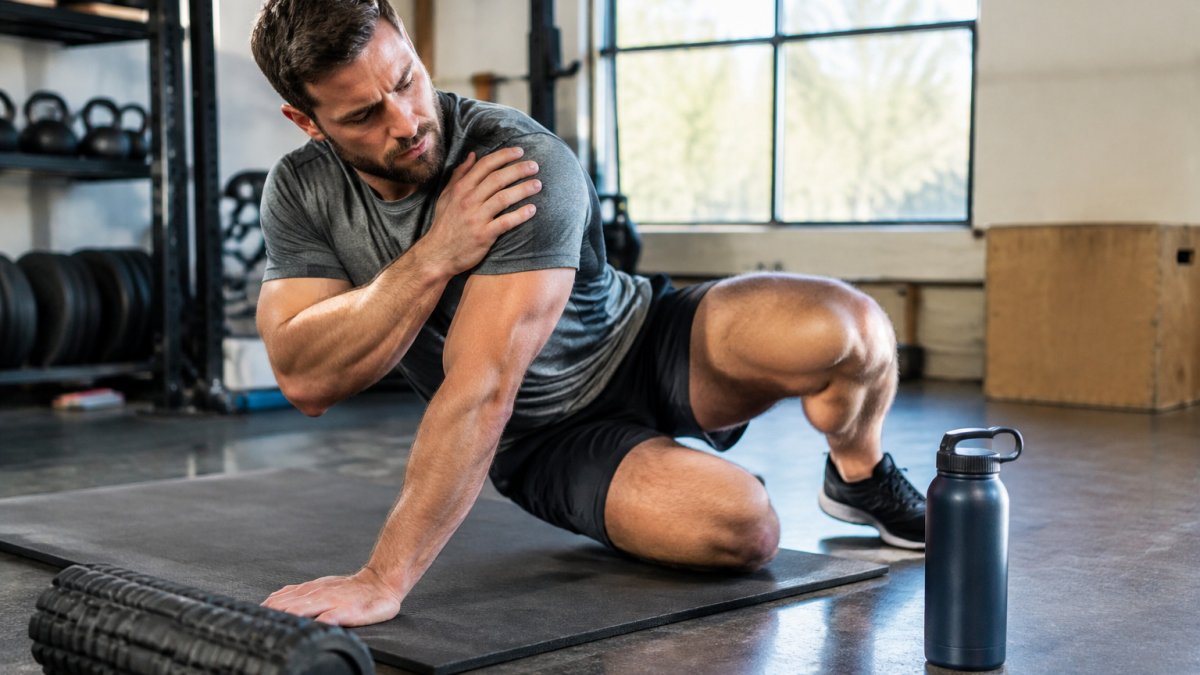
Practical steps that work:
- Build volume slowly. Increase weight or reps by small steps, not big jumps.
- Warm up properly. Spend 5 to 10 minutes on mobility and light sets before heavy work.
- Strengthen the muscles around the joint. Strong muscles take pressure off the joint.
- Schedule real rest days. Recovery is where your joints adapt.
- Use the right gear. Worn-out shoes and poor form add stress to knees, hips, and shoulders.
Smart training is the foundation of joint care. If you are weighing options, you can check out our MTS Machine Motion joint support formula and the Axe & Sledge Joint+ V2 for ingredient details. Keep your expectations realistic. Supplements support joint care. They do not fix a training plan that is overloading your body.
When to See a Doctor for Joint Pain
Get medical advice if you notice any of the following:
- Joint pain lasting more than two weeks without improvement
- Visible swelling in the joint that does not go down
- Locking, catching, or the joint giving way
- Numbness, tingling, or weakness in the limb
- Pain that is severe or wakes you up at night
- A joint injury from a fall, collision, or sudden twist
- A joint that is hot, red, and swollen, especially with fever
That last one is not a wait-and-see situation. A hot, red, swollen joint with fever needs same-day medical attention. Do not train on it and do not ice it and hope for the best.
What actually happens at the evaluation
Most athletes walk into a doctor's office expecting an X-ray and a verdict. It is more involved than that, and knowing the process helps you get more out of the visit.
Then comes a physical exam. They will palpate the joint line, test range of motion against the other side, check for swelling, and run provocation tests that stress specific structures.
Imaging has limits, and this is the part athletes misunderstand. X-rays show bone and joint space but not cartilage, ligaments, or early soft-tissue damage. MRI shows soft tissue but can light up findings that are not the source of your pain.
Planning a safe return
Once you have a diagnosis, the return-to-training plan should be staged, not all-or-nothing.
Watch out: the most common mistake after an evaluation is treating the appointment as the finish line.
This article gives general information only. It cannot diagnose your specific joint problem. Only a qualified professional who examines you can do that.
Getting Your Joints Checked Before the Problem Gets Worse
Waiting to see if it gets better is the most common mistake. Athletes push through joint pain because they do not want to lose training time. That habit can turn a minor problem into a long-term one.
Here is a simple plan:
- Log your symptoms. Note where the pain is, when it appears, and what triggers it.
- Adjust your training. Back off the movements that set off symptoms while you get checked.
- Book an evaluation. Start with your doctor or a sports medicine provider.
- Follow the plan. Stick with the rehab, load changes, and recovery steps you are given.
- Recheck. If symptoms are not improving, go back and get a second look.
Joints do not bounce back the way muscles do. Protecting them now keeps you training for years. Explore our Free Tools & Fitness Calculators to plan your next phase.
Frequently Asked Questions
How do I know if my joints are bad?
Pain that lasts more than a few days after training, morning stiffness that eases slowly, swelling that comes back with the same load, and a joint that feels less stable or loses range of motion are the signs that matter. Ordinary soreness fades within a day or two and does not make a joint feel locked or unstable. If you notice the persistent pattern, get a qualified healthcare professional to evaluate the joint. Do not train through sharp pain or swelling that keeps returning, because that is how a manageable problem becomes a long-term one.
What sport is hardest on your joints?
Sports involving repeated impact, heavy loading and sudden changes of direction put the most stress on joints. Running, basketball, soccer, football and heavy weightlifting all fit that description. The sport matters less than the training load, though. An athlete who ramps volume too fast in any sport will see joint problems sooner than someone who builds up gradually. Track your weekly volume and recovery so you can spot the overload before the joint does.
Can sports injuries increase the risk of osteoarthritis?
Yes. Injuries can raise the long-term risk of osteoarthritis, so take them seriously. Proper rehabilitation after an injury is one way to help lower that risk.
When should an athlete see a doctor for joint pain?
See a doctor if joint pain persists beyond a couple of weeks, if swelling keeps returning, if the joint locks, gives way or feels unstable, or if pain wakes you at night. Any sharp pain during a movement that has not resolved with rest also warrants an evaluation. A qualified healthcare professional can examine the joint and tell you whether it is ordinary overuse or something that needs a structured treatment plan. Do not self-diagnose from a supplement label or an online checklist.

Leave a comment